Published April 2026 · ProSponsor Research
Watch any PGA Tour broadcast and you'll see the business of golf written across every player's outfit. A logo on the hat. Another on the chest. A patch on the collar you didn't notice five years ago.
Every one of those placements has a name, a price, and a set of rules governing it. Most fans — and frankly, most brands considering their first golf sponsorship — have no idea how the system works.
Here's how it actually breaks down.
Eleven Upper-Body Placements — Seven on the Shirt, Four on the Hat
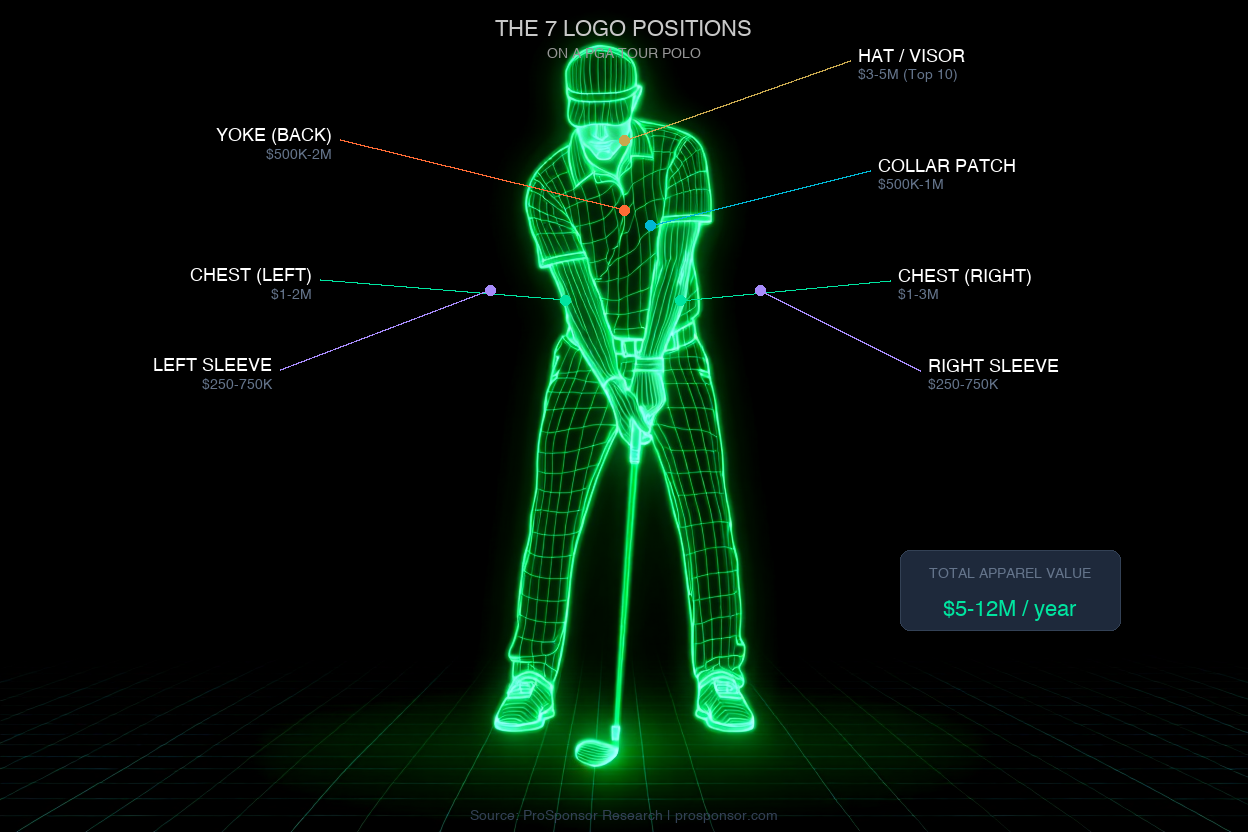
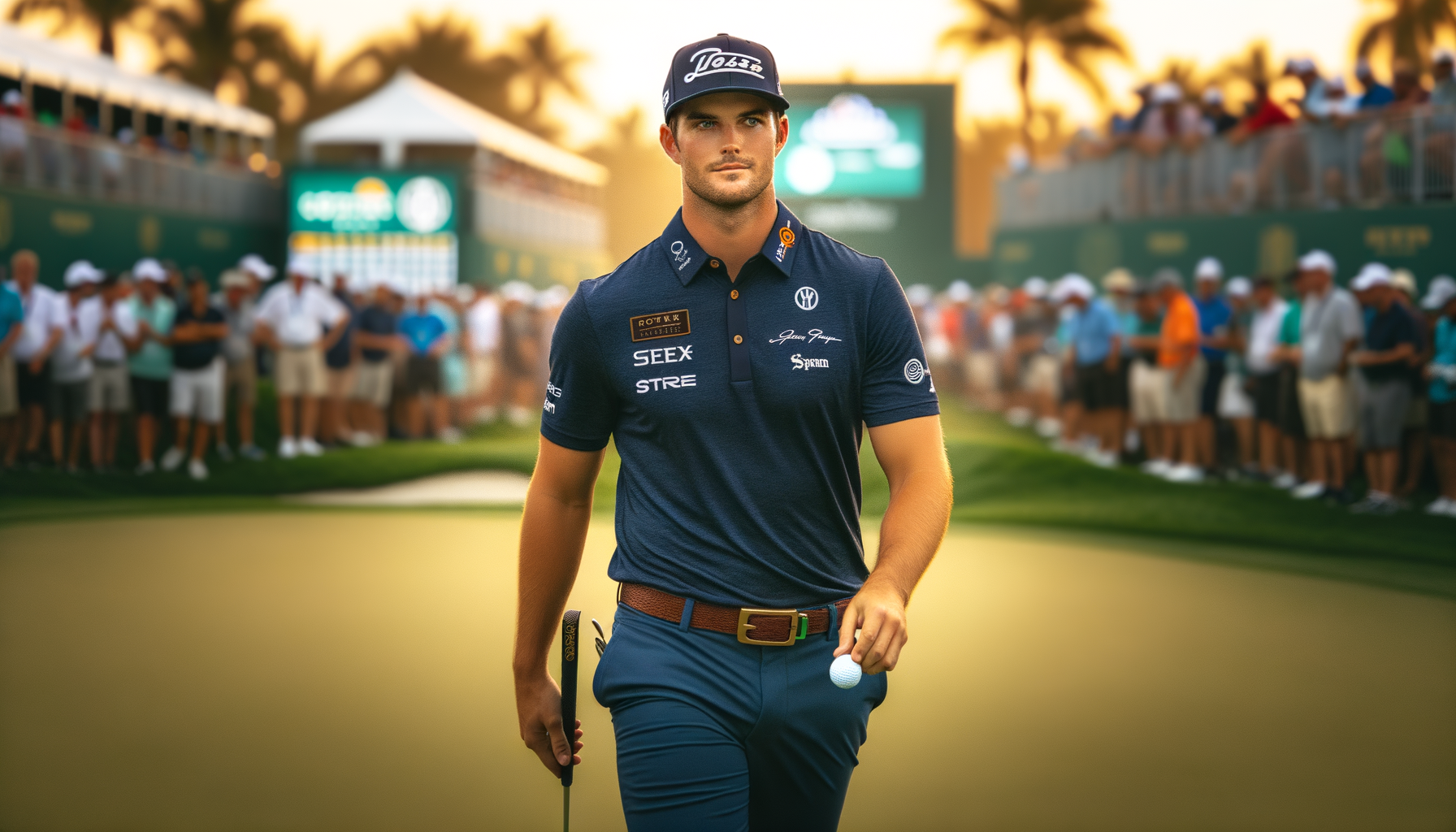
A PGA Tour player's upper body carries up to eleven distinct sponsorship placements — seven on the shirt and four on the hat. Each one can be sold to a different brand.
The Seven Shirt Positions
The PGA Tour's Player Endorsement Policy defines seven allowable logo positions on a player's upper-body apparel:
- Left chest (breast)
- Right chest (breast)
- Left sleeve
- Right sleeve
- Left collar
- Right collar
- Yoke (the panel at the back of the shirt, just below the collar seam)
Each position gets one mark. Maximum size: 3 inches by 5 inches. That's the official limit from the Tour's handbook, and it applies across PGA Tour, Korn Ferry Tour, and PGA Tour Champions events.
The Four Hat Positions
Headwear operates outside the seven shirt positions and carries its own set of distinct placements:
- Front panel (crown) — the single most valuable sponsorship placement in professional golf
- Left side panel — often sold to a secondary sponsor or bundled with the front
- Right side panel — same as left; may be sold independently or as a pair
- Back panel — visible during putting and walking; worth a fraction of the front
Together, that's eleven individual placements a brand can buy on a player's upper body alone — and every one of them is potentially held by a different sponsor.
There's also a soft guideline of four sponsor logos total on clothing and headwear combined. It's advisory — not a hard cap — but the Tour expects players to present what they call "a neat appearance" with logos "in good taste as to content, size, location and quantity."
What's explicitly banned: logos across the back of a shirt, running down full sleeves, down pant legs, or on the rear of pants. The Tour isn't NASCAR. At least not yet.
The Hat: Golf's Most Valuable Real Estate
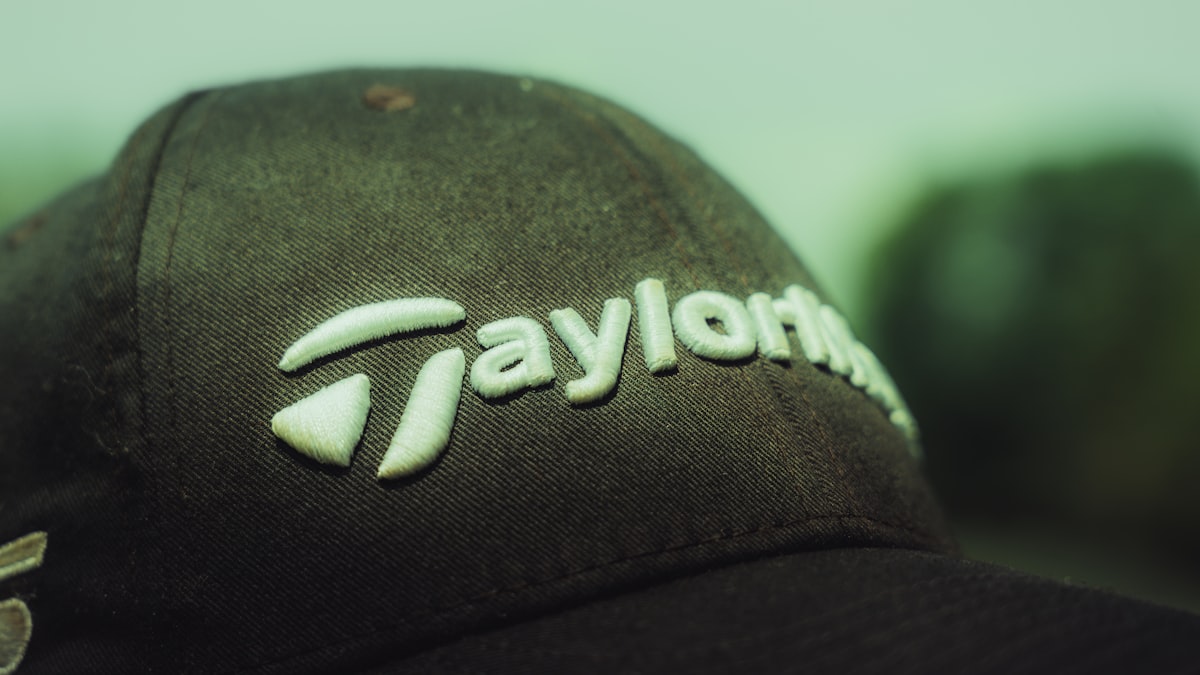
The hat front — the crown — is in nearly every broadcast frame. On camera during putts, approaches, tee shots, interviews. A four-day tournament might put that logo on screen for 20+ hours.
What that's worth depends on who's wearing it.
| Player Tier | Estimated Hat (Crown) Value |
|---|---|
| Top 10 players | $3M–$5M+ per year |
| Top 30 players | $1M–$3M per year |
| Tour regulars (top 125) | $250K–$500K per year |
| Korn Ferry Tour players | $25K–$75K per year |
Justin Rose's Morgan Stanley hat deal was reportedly worth $5 million annually. Phil Mickelson's KPMG hat placement became so iconic it had its own parody Twitter account. Rory McIlroy's Nike deal — $200 million over ten years — covered hat, apparel, and footwear, making it the most comprehensive single-brand relationship in golf.
The side panels and back are worth considerably less — often one-tenth of the crown for the back position. But for brands that can't justify a seven-figure front-panel deal, a side panel offers broadcast visibility at a fraction of the cost. At the 2025 PGA Championship, players like Scheffler and Schauffele had different brands on left side, right side, and back — each sold separately.
Collar Patches: Where Things Got Interesting
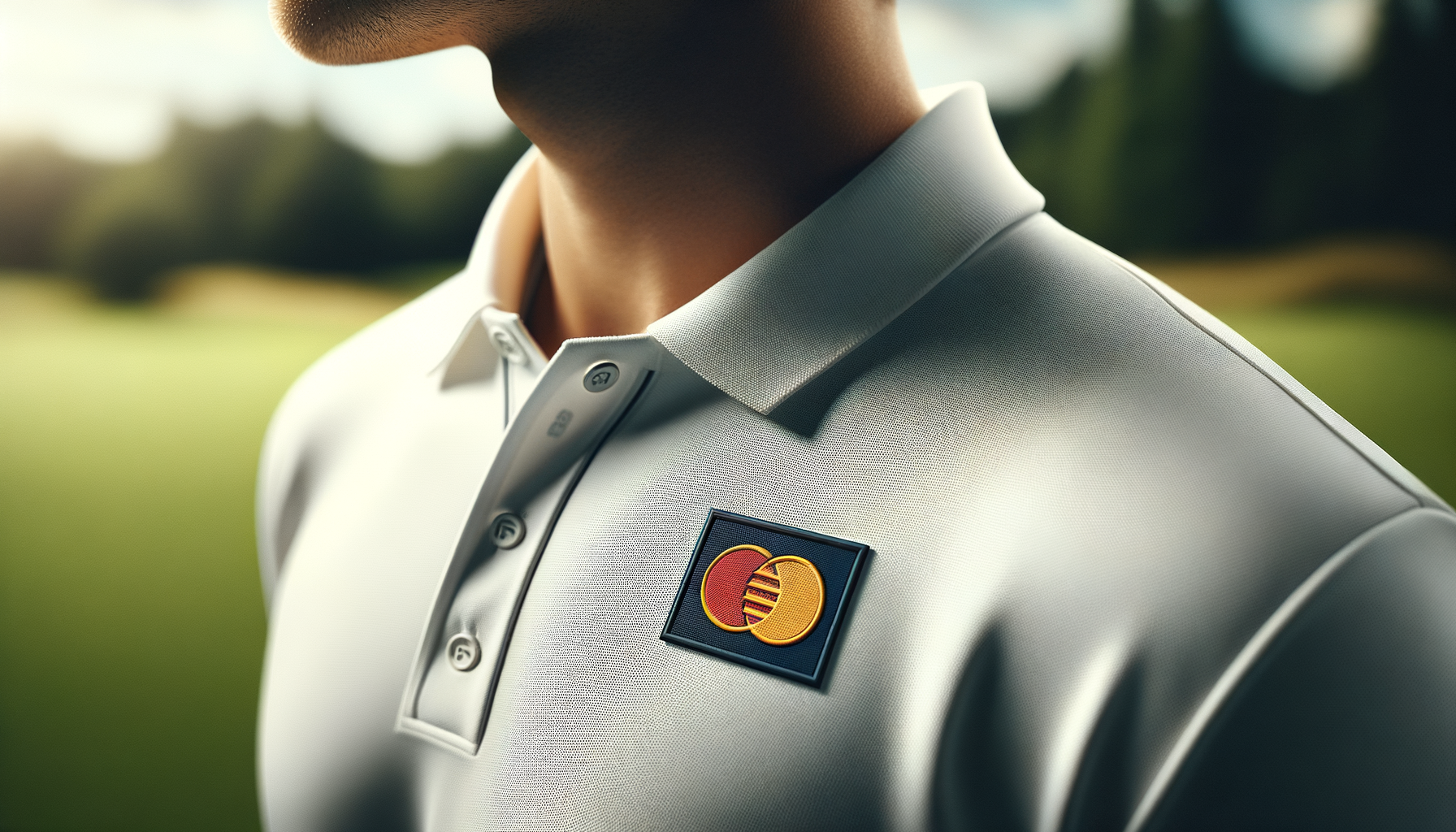
Watch a broadcast today and you'll notice logos on player collars that simply weren't there a decade ago. Collar patches have become one of the most sought-after placements in golf sponsorship.
The reason is camera angles. Modern tournament coverage uses more face-on shots during putting and close-up interview frames. The collar sits in the sightline between the player's face and the microphone. Brands figured this out.
The PGA Tour's endorsement policy has included collar positions (right and left) in its approved placements for years, but adoption by players and brands has accelerated meaningfully since 2020. Financial services firms and luxury brands have been particularly aggressive in securing collar placements — the positioning reads as premium and the visibility-to-size ratio is exceptional.
The Chest: Traditional but Contested
The left breast position — over the heart — is the traditional "primary" apparel placement. For decades, this was the apparel brand's territory. Nike, adidas, Puma, Under Armour: their swoosh, trefoil, or logo lived here as a function of the apparel deal.
The right breast is typically where a secondary corporate sponsor lands. Financial services, automotive, and technology brands favor this position. For a mid-tier professional, a chest placement runs $250,000 or more per year. For top players, the number climbs to seven figures.
What's changed: as equipment and apparel deals have consolidated (some players now wear unbranded shirts with only sponsor patches), the chest positions have become available as standalone sponsorship inventory. A player who isn't contractually bound to a single apparel brand can sell both chest positions independently — effectively doubling the revenue potential of that real estate.
Sleeves: The Workhorse Placement
Sleeve patches are the most common entry point for brands new to golf sponsorship. Both sleeves are available, and they're priced accessibly relative to hat or chest positions — typically $50,000 to $100,000 per year for a card-holding Tour player.
There's a tactical nuance here that most brands miss: for a right-handed golfer, the left sleeve gets more camera time during the swing follow-through, while the right sleeve is more visible during the address position. Smart brands ask which sleeve they're getting.
The Yoke: Putting's Hidden Billboard
The yoke — that panel at the back of the shirt just below the collar — is the placement most casual viewers don't consciously notice but see constantly. Every time a player stands over a putt, the camera is behind them. The yoke is in frame for every green-reading walk, every practice stroke, every putt.
This position has grown in value as broadcast coverage has shifted toward more putting content. It's particularly popular with brands that want frequency of exposure without the premium of a hat or chest deal.
Beyond the Shirt
The endorsement map extends past apparel:
- Shoes: Usually tied to the apparel deal, but increasingly sold separately as footwear brands like FootJoy, Ecco Golf, and G/FORE compete outside the traditional athletic brands
- Glove: Often bundled with the equipment deal but visible on every shot
- Golf bag: Staff bag deals are bundled with equipment contracts — the bag is a walking billboard visible in every group shot
- Rangefinder/GPS: Growing category as devices become ubiquitous on Tour
- Sunglasses/eyewear: Only about a third of top golfers have an eyewear deal — one of the most open endorsement categories in golf
So What Does This Mean for Brands?
The PGA Tour sponsorship ecosystem is more fragmented — and more accessible — than most brands realize. Not every player has every position filled. In our database of 640+ professional golfers, some endorsement categories show fill rates below 40%.
That fragmentation is the opportunity. A beverage brand doesn't need a $5 million hat deal with a top-10 player to get Tour exposure. A sleeve patch on a Korn Ferry Tour player making weekend cuts costs less than a single billboard on a highway and reaches a more affluent, engaged audience.
The key is knowing which players have which positions open, what their audience looks like, and what the going rate is for that tier of player. That's exactly what endorsement intelligence is built to answer.
The Typical Deal Structure
Most Tour players carry three to five corporate partners. A representative setup:
- Hat deal with an equipment or corporate brand
- Chest placement with a financial services or technology partner
- Sleeve patch with a consumer brand
- Collar patch with a luxury or financial brand
- One to two name-and-likeness agreements without on-course logo requirements (these cover appearances, social media, and promotional obligations)
Players typically commit three to four appearance or promotional days per year per sponsor. The total value across all partnerships for a top-50 player often exceeds their on-course earnings.
PGA Tour vs. LIV: Different Sponsorship Models
LIV Golf's team-based format fundamentally changes the sponsorship equation. LIV's 13 franchises have their own team kits and colors, which can subsume individual player logo inventory. A hat placement worth $5 million on the PGA Tour might be replaced by a team-mandated hat on LIV.
This structural difference is part of why individual player endorsement values have evolved differently across the two tours — and why the ongoing PGA Tour–LIV negotiations have included significant discussion of player marketing rights.
ProSponsor tracks endorsement categories and partnership availability for 640+ professional golfers across PGA Tour, Korn Ferry Tour, LPGA, and college golf programs. Browse the database →