
The era of unlimited funding in professional golf is over. On April 29, 2026, Saudi Arabia's Public Investment Fund announced it will end its backing of LIV Golf after the current season concludes. After pouring more than $5 billion into the breakaway league since its June 2022 launch, PIF stated that the "substantial investment required by LIV Golf over a longer term is no longer consistent with the current phase of PIF's investment strategy" — citing priorities around World Expo 2030 and the 2034 FIFA World Cup.
For the sponsorship world, this isn't just a golf story. It's a case study in what happens when guaranteed money disappears and athletes who left traditional endorsement ecosystems suddenly need them again.
How LIV's Sponsorship Model Worked
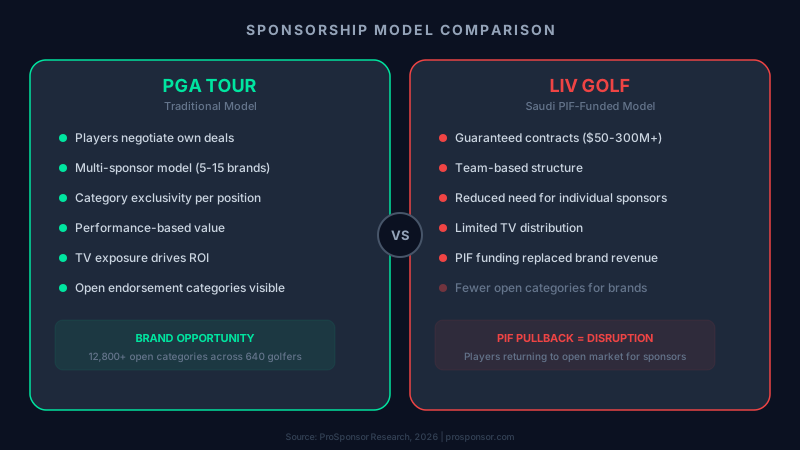
LIV Golf operated fundamentally differently from the PGA Tour when it came to brand partnerships. Where PGA Tour players build individual endorsement portfolios across 20 distinct categories — from the hat on their head to the shoes on their feet — LIV adopted a team-based model closer to European football or NASCAR.
LIV's 13 teams sold jersey sponsorships and team-level partnerships. The league itself secured corporate deals with partners including Rolex, HSBC, Salesforce, Qualcomm, and MGM Resorts — reportedly totaling $500 million in multi-year commitments. Individual players received guaranteed contracts rather than earning through traditional prize money and endorsement deals.
The numbers were staggering. Dustin Johnson's deal was reportedly worth $150 million. Jon Rahm, who joined in December 2023, signed for a figure reported above $300 million. Each event carried a $25 million purse — with $4 million for the winner and a guaranteed $50,000 minimum even for last place in the no-cut, 54-player field.
What Changes Without PIF
The 2026 season remains fully funded. Players' guaranteed payments are secured through the year. But 2027 is undefined.
LIV has secured $500 million in independent sponsorship revenue, but that doesn't replace the billions PIF was providing. The league will need to find new investors, restructure player contracts, or shrink. The 2023 framework agreement that was supposed to merge PGA Tour, LIV, and DP World Tour has stalled — PGA Tour CEO Brian Rolapp has publicly stated the tour is not pursuing a deal.
So far, Brooks Koepka is the only major LIV player to return to the PGA Tour via a new Returning Member Program. Others — including Cam Smith, Jon Rahm, and Bryson DeChambeau — have stayed, at least through their existing contract terms.
The Sponsorship Ripple Effect
When top players left for LIV in 2022, many shed individual sponsorships. Some brands wouldn't associate with Saudi-funded golf. Others couldn't justify paying endorsement fees to players who were already receiving guaranteed nine-figure contracts. The traditional endorsement category model — where a brand partners with a player for a specific equipment or apparel category — was disrupted.
If LIV contracts shrink or expire without renewal, those players will need traditional endorsement income again. And they'll re-enter a market that has continued to evolve without them.
ProSponsor tracks 20 endorsement categories across 640+ professional golfers — representing more than 12,800 individual partnership opportunities. Even among the most visible players currently on the PGA Tour, our data shows that categories like eyewear, beverage, and automotive have significant open availability. A wave of returning LIV talent would expand that landscape considerably.
What Brands Should Be Watching
For brand marketing teams evaluating golf sponsorship opportunities, three things to consider:
The talent pool is about to get more interesting. Players who were off the table for four years could become available. Many still have enormous social followings and name recognition that transcended their move to LIV.
Category availability will shift. Players returning from LIV may have lapsed equipment and apparel deals. The endorsement categories with the most openings — particularly in accessories, lifestyle, and corporate partnerships — could see new supply from high-profile athletes.
Early movers get better positioning. When the 2022 LIV exodus happened, the brands that moved fastest to sign replacement ambassadors on the PGA Tour got the best deals. The reverse could happen as players return.
What This Means for the Market
LIV Golf's Saudi experiment proved that money alone doesn't build a sustainable sports property. Broadcasting deals, fan engagement, and — critically — a sponsorship ecosystem that works for brands at every tier are what make a professional tour viable long-term.
The PGA Tour's traditional model, where individual athletes build personal brand portfolios across equipment, apparel, and corporate categories, has survived its biggest competitive threat. That model is what ProSponsor was built to serve — mapping every partnership opportunity, tracking what's open, and connecting brands with athletes who fit their strategy.
The next twelve months will reshape professional golf's sponsorship landscape more than any period since LIV launched. We'll be tracking every move.