Published August 2026 · ProSponsor Research
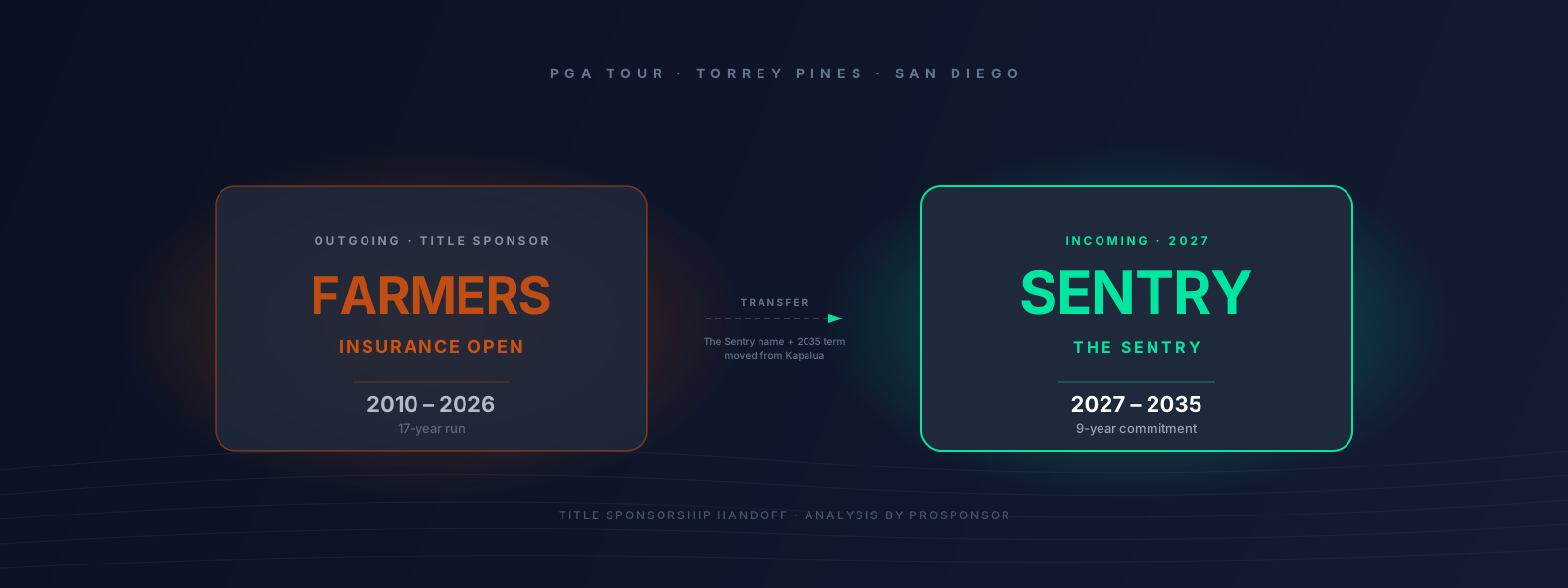
The 2026 Farmers Insurance Open was the last one. After 17 years as the title sponsor of the PGA Tour's marquee San Diego event, Farmers Insurance stepped away following the February 1 finish. Sentry Insurance takes over in 2027, and the tournament will be rebranded The Sentry, January 25-30 at Torrey Pines.
Two things make this handoff more interesting than a normal sponsor cycle. First, it isn't really a "new" deal for Sentry — the company is transferring an existing contract that ran through 2035, salvaged from a venue that no longer exists. Second, the vacancy at Torrey Pines opened faster than any brand-side team could plan around, because Farmers had held the position so long that no one was seriously courting it.
Both are useful lessons for anyone thinking about title sponsorships in professional golf.
The Sentry Story: A Contract That Outlived Its Venue
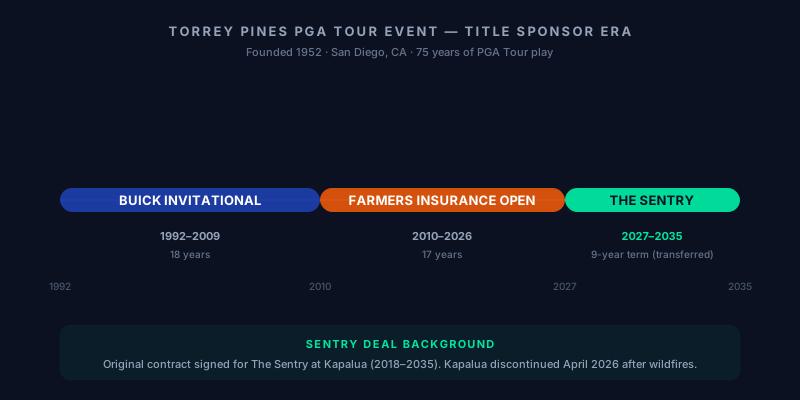
Sentry Insurance became the title sponsor of the PGA Tour's season-opening Tournament of Champions at Kapalua, Hawaii in 2018. In April 2026, the PGA Tour discontinued the Kapalua event after wildfire-related environmental issues on Maui made it unworkable as a Tour venue. Sentry's contract still had nine years to run.
Most sponsorship deals in this situation collapse. The venue disappears, the naming rights vanish with it, and the brand and the Tour spend the next year in litigation over unearned value. That didn't happen here. Sentry and the PGA Tour restructured — the contract term stays intact through 2035; the venue moves from Kapalua to Torrey Pines; the tournament name "The Sentry" transfers to the new event.
For sponsorship professionals, this is the outcome a well-structured contract should produce. Portability language, force majeure clauses, and a good working relationship with the property owner turn a category-killer event (wildfires ending a signature tournament) into a lateral move. Sentry gets nine more years of PGA Tour title inventory at a venue that's arguably more visible than Kapalua — Torrey Pines has hosted two U.S. Opens, sits in a top-20 U.S. media market, and airs to a mainland audience already tuned in for football season's end.
That contract survivability is worth studying on its own. Most brand-side sponsorship teams focus on getting the deal signed and never build in what happens if the property changes underneath them.
The Farmers Vacancy: 17 Years of Dead Air on the Market
Farmers held the Torrey Pines title from 2010 through 2026. Buick had it for the 18 years before that (1992-2009). Each transition was a rare event — title sponsorships on marquee PGA Tour stops don't come open often, and when they do, the deal is usually locked in before the outgoing sponsor's tenure is publicly announced as ending.
The brand-side lesson: if you want a title sponsorship on a top-tier PGA Tour event, you need to be having conversations with the Tour long before an inventory opening is visible. Sentry was already inside the tent. Farmers' expiration got quietly earmarked for them as soon as Kapalua's fate became clear. Any outside brand walking up cold in early 2026 to ask about Torrey Pines was already too late.
This isn't unique to golf. Naming rights on stadiums, tour title sponsorships across sports, jersey patch deals in the NBA and MLB — most flip inside a small circle of brands that were already being pitched by the property. The public announcement is the last step, not the first.
What a PGA Tour Title Sponsorship Actually Buys
Financial terms weren't disclosed for the Sentry-Torrey Pines transfer, which is normal for PGA Tour title sponsorships. What the check does buy is a defined package that's fairly consistent across top-tier Tour events:
- Naming rights across all official communications, broadcasts, and PGA Tour digital properties
- Broadcast integration on CBS, Golf Channel, and Paramount+ across the four tournament days, plus pre- and post-event coverage
- Category exclusivity — no other insurance brand can activate at or near the event
- Corporate hospitality at Torrey Pines during tournament week, typically including access to the clubhouse, on-course chalets, and pro-am spots that put executives inside the ropes with Tour players
- Community rights — the ability to run local activations, sponsor youth golf initiatives, and be positioned as San Diego's official golf brand for the deal term
For an insurance brand, the last two matter as much as the broadcast time. Insurance is a relationship business. Pro-am spots and hospitality at Torrey Pines put executives in front of San Diego's business community every January. A 17-year run means Farmers built durable relationships that far outlast the sponsorship itself — which is one plausible reason they were comfortable letting the title go.
What Brands Should Watch For Next
Torrey Pines is locked through 2035, but other title sponsorships turn over on a regular cadence. Some to watch:
- PGA Tour Champions events cycle their title sponsors more frequently than main Tour events and cost significantly less per year
- Korn Ferry Tour events are the entry point for brands new to golf title sponsorships — smaller purses, smaller crowds, but real PGA Tour Network broadcast time and a young player pipeline
- LPGA events remain underpriced relative to their audience quality, particularly for financial services and consumer packaged goods brands looking to reach a female audience with real spending power
- DP World Tour events in the U.S. (like the Genesis Scottish Open co-sanctioned week) create hybrid opportunities that few U.S. brands are actively working
The pattern to notice: when a marquee event's title comes up, it's usually already spoken for. The interesting inventory is a tier below, where brands can build a title sponsorship position that either grows with the event or becomes a stepping stone into a bigger deal later.
The Broader Sponsorship Landscape
Title sponsorships are one layer of the golf sponsorship market. Below them sit event-level partnerships — hole sponsorships, on-course activations, official-status deals — and below those, the individual athlete endorsement categories that ProSponsor tracks across 640+ professional golfers.
For a brand thinking through golf sponsorship strategy, the layers work together. A title sponsorship builds mass awareness. Event partnerships create on-site presence. Individual athlete deals create sustained visibility across the season through logo placements on hats, shirts, and equipment — placements that show up on broadcasts even when your title-sponsored event isn't the one being played.
Sentry now has the top layer for a decade. Farmers spent 17 years there. What's less visible from either brand's public presence is how much of the value came from the layers underneath — the pro-am relationships, the local activations, the year-round positioning that a title sponsorship makes possible but doesn't automatically deliver.
That's the work the deal doesn't do for you. Whoever writes the check for the naming rights still has to build the program around it.